Pop's World - Running game
ABI GAMEAdventure
4.2917.00 Reviews
- Version
- 3.1.5
- Installs
- 50.00M
- Age Rating
- Everyone
Screenshots
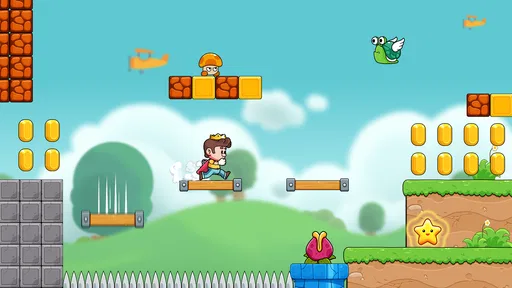
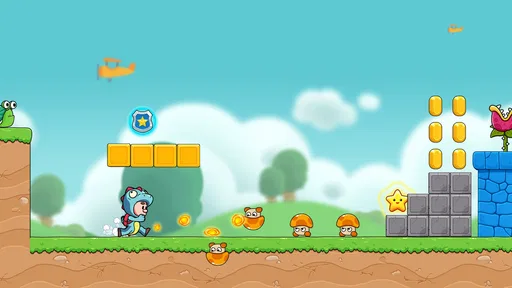
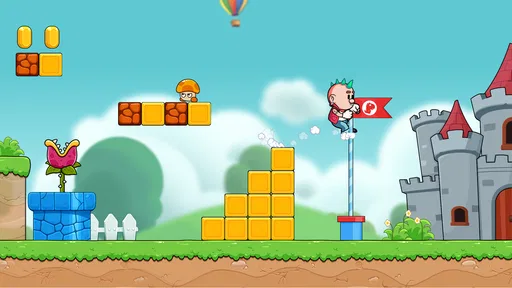
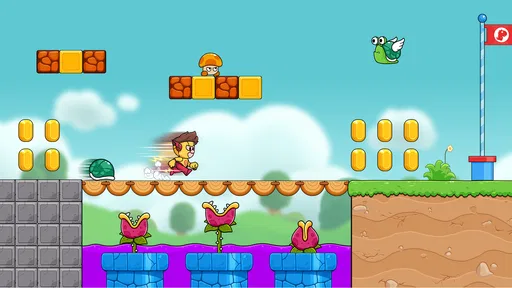
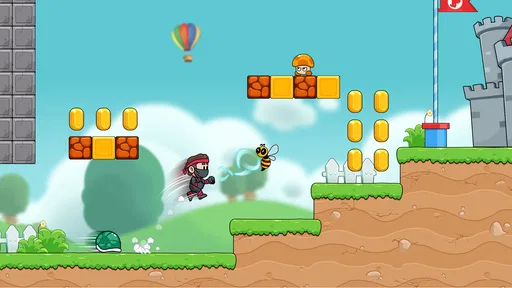
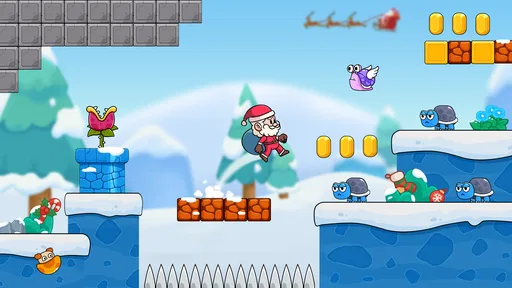
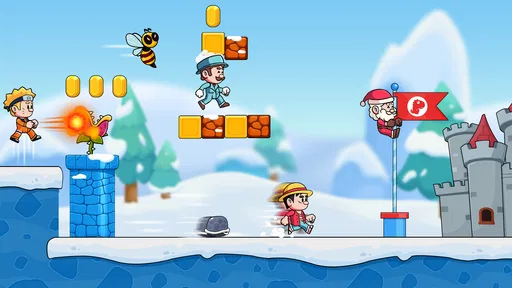
Our Review of Pop's World - Running game
 Analysis by Appyee
I approached Pop's World expecting a straightforward adventure runner, and that is exactly where its appeal lies. It puts you in a bright, familiar platforming situation: move through dangerous stages, collect useful objects, and work toward rescuing a princess from monsters. The idea is simple enough for a first-time player to understand almost immediately, but there is still room to improve your timing and route choices once the early novelty wears off.
This is a free game from ABI GAME, aimed at Everyone, and it belongs to the kind of casual adventure experience that works well in short sessions. It is not trying to replace a large console platformer. Instead, it gives you a compact loop built around movement, obstacles, collecting coins, stars, and mushrooms, and gradually becoming more comfortable with the rhythm of each run.
After spending time with it, my main impression is that the game is easiest to enjoy when you treat each attempt as practice rather than a demand for perfection. The first few runs are about learning how the character responds and where danger tends to appear. Later runs feel better because you stop reacting late and begin planning your movement before the next obstacle arrives.
Getting from the first launch to a meaningful win
I’d use this section to make the first session feel manageable: focus on learning how movement responds, then aim for one safe run rather than collecting everything at once. A small, deliberate success gives you a useful baseline for judging the game’s pace and deciding what to try next.
What to expect when you begin
The opening experience is deliberately accessible. You do not need to understand a complicated story or learn a large collection of systems before playing. The central goal gives every action a reason: progress through Pop’s World, gather items along the way, and keep moving toward the rescue objective. That clarity is useful for younger players and for anyone who wants an adventure game that does not bury its basic purpose under menus.
The collecting element also gives the stages more purpose than simply reaching the end. Coins are the most obvious reason to look around, while stars and mushrooms encourage you to pay attention to what is placed along the route. I found that this creates a useful choice during play: do I take the safer line and preserve the run, or do I move toward a tempting item and accept more risk?
That decision is where the game becomes more interesting than its short description suggests. A player who only rushes forward may finish a stage, but someone who watches the layout can often make a more rewarding attempt. The best approach is not to grab everything automatically. I recommend treating each collectible as a prompt to inspect the nearby path, especially when your movement is not yet automatic.
The presentation is aimed at broad accessibility rather than realism. The adventure setting, monsters, and collectible objects are easy to read, which matters when the screen becomes busy. I never felt that the basic objective was hidden from me. If you are choosing this for a child, a casual player, or someone who prefers recognizable platforming ideas, the learning curve is less intimidating than in many larger adventure games.
Installing it and making the first session comfortable
Pop’s World is free to install and supports devices running Android 7.1 or later. The current version is 3.1.2, so it is worth checking that your device meets that basic requirement before you start. The game has passed the point of being a tiny experimental release: it has more than 50 million installs, which helps explain why it is easy to encounter as a mainstream mobile option rather than an obscure side project.
Because the game is free, I would begin with a simple rule: play several stages before thinking about optional purchases. In-app items range from $0.99 to $19.99 per item, so the sensible way to judge the experience is to see whether the free portion fits your habits first. You do not need to make a purchase to understand the core appeal, and spending immediately would make it harder to tell whether you genuinely want more of the game.
For a first session, I suggest holding the phone in a way that leaves your main controls unobstructed and using a quiet moment rather than trying to learn during a commute with constant interruptions. Running games depend on quick reactions, and a missed input can look like a game problem when it is really an awkward grip or a distracted player. A stable hand position makes the early stages feel much more forgiving.
I also recommend starting with an exploratory mindset. Do not worry if the first attempt ends sooner than you hoped. Notice how quickly the character responds, how much time you have to react, and whether you naturally focus on the route or on the collectibles. Those observations tell you which habit to improve first. For me, learning the pace of movement was more valuable than chasing a perfect collection immediately.
The first successful action is more than reaching the finish
A meaningful first success is not simply completing a run. It is completing one while making a deliberate decision. For example, choose a collectible that looks reachable, approach it without abandoning your awareness of the next obstacle, and then return to the safest line. That small exercise teaches the basic relationship between movement, reward, and risk better than rushing through a stage without looking around.
On an early attempt, I would focus on one goal at a time. First, stay alive long enough to understand the level’s rhythm. Next, collect a few visible objects that do not require a desperate maneuver. Only after that should you try to improve the route. This order reduces frustration because every run has a clear purpose, even when you do not reach the final rescue objective.
The useful trick is to look slightly ahead of the character instead of staring only at the current position. In a runner, the danger is often created by what is about to enter your decision window. Keeping your attention on the next section gives you a moment to choose whether to maintain speed, adjust your line, or ignore an item. That is a practical skill that makes the game feel less random.
Another good first-session habit is to separate mistakes caused by timing from mistakes caused by greed. If you fail while trying to collect a mushroom or star, ask whether the item was genuinely worth the detour at that point. If the answer is no, skip it on the next attempt. This is one of the clearest ways to improve without needing a complicated strategy guide: learn which rewards help your run and which ones merely tempt you into unnecessary danger.
Where new players can become confused
The biggest potential confusion is assuming that every visible collectible should be taken. The game makes collecting feel important, but that does not mean every object deserves the same level of risk. A safer route can be the better route, particularly when you are still learning the controls. Progress is easier to build when you make selective decisions instead of turning every item into a test of nerve.
Players may also mistake a failed run for evidence that the game is unfair. In my experience, the more useful response is to identify the exact moment when attention broke down. Did you react to the obstacle itself, or did you wait until it was already too close? Did you change direction because you wanted a coin, then forget what was ahead? These questions turn a vague failure into something you can correct on the next attempt.
Another source of friction is the difference between playing for completion and playing for collection. Those are related but not identical goals. If you want the rescue objective above all else, prioritize survival and learn the route. If you want a stronger collection result, expect to replay sections and accept that some attempts will be less successful. Trying to accomplish both perfectly from the beginning can make a simple game feel unnecessarily stressful.
The age rating of Everyone makes the game approachable for a broad audience, but that should not be confused with unlimited patience. Younger players may understand the objective quickly while still needing time to develop the timing required for longer runs. I would introduce it as a game where repeating a section is normal, not as an experience they must finish correctly on the first try.
How it fits into everyday play
Pop’s World suits the kind of spare moment when I want a focused activity without committing to a long story. Imagine waiting for an appointment: you can play a short run, notice one mistake, and put the phone away with a clear idea of what to try next. That works better here than in a role-playing game that requires remembering a plot, managing equipment, or finding a safe stopping point.
It can also work as a shared casual game for a family, especially when one person plays and another suggests whether to chase an item or stay safe. The simple rescue goal makes conversation easy, while the collecting choices give observers something concrete to discuss. I would not present it as a deep multiplayer substitute, but it can still create a small, friendly challenge around improving the next attempt.
For commuters or anyone playing with inconsistent attention, the trade-off is important. Short sessions are convenient, but a runner still punishes divided focus. I would choose this over a slower puzzle game when I want quick reactions, but I would choose the puzzle game instead if I expect frequent interruptions. Pop’s World rewards concentration more than passive tapping.
Compared with a traditional platforming adventure, this game is lighter and more immediately understandable. You get less room for exploration and fewer reasons to linger over a large world, but you also avoid the heavier learning burden. Compared with endless runners, its rescue framing and recognizable collectibles give the action a clearer adventure identity. The compromise is that players seeking deep character development, elaborate maps, or a substantial narrative may find the experience too narrow.
Practical ways to improve without overcomplicating the game
My first tip is to make a “survival run” before making a “collection run.” On the survival attempt, ignore anything that forces a risky change of direction and concentrate on reading the stage. Once you know where your attention is usually challenged, return and target the easier coins, stars, or mushrooms. This two-pass method is more efficient than trying to learn the route and maximize every reward simultaneously.
My second tip is to use failed attempts as route notes. You do not need to memorize an entire stage. Remember one landmark before the mistake and one action that would have helped, such as slowing your decision-making, staying centered, or refusing a tempting detour. Small notes are easier to apply than a vague promise to “play better,” and they make improvement visible from one run to the next.
My third tip is to decide what success means before launching a stage. If you have only a few minutes, aim for safe progress. If you have more time, use the session to test an alternate line and see whether a collectible is worth the added exposure. This prevents the game from feeling inconsistent: the same stage can serve as a quick challenge or as a deliberate practice exercise depending on your goal.
A fourth useful trade-off concerns purchases. Since optional items can cost between $0.99 and $19.99 each, I would not use them as a substitute for learning the route. If you eventually spend money, do it because you already enjoy returning to the game, not because one frustrating run made you impatient. That approach keeps the free starting point useful and makes any later decision more intentional.
Who should choose it, and who should look elsewhere
I would recommend Pop’s World to someone who wants a colorful, easy-to-understand adventure runner with a clear rescue objective. It is especially suitable for first-time players, families looking for an approachable game, and experienced mobile players who enjoy improving through repeated short attempts. The broad age rating and familiar collecting structure make it easy to explain without a long tutorial conversation.
I would be more cautious if you want a calm game that can be played while multitasking. The action asks for attention, and the collecting system can tempt you into mistakes when you are not watching the next section. I would also point fans of expansive platformers toward a larger alternative if they need exploration, rich storytelling, or a world that rewards wandering rather than forward movement.
The average rating of 4.2 from around 100 thousand ratings suggests that the game has found a substantial audience, while roughly 902 written reviews add a smaller but useful layer of player reaction. I would treat those figures as a sign of broad interest rather than a guarantee that every player will enjoy the same pace. The game’s strengths are clearest when you like simple goals, quick retries, and the satisfaction of improving a route.
My recommendation after learning its rhythm
ABI GAME has built Pop’s World around an uncomplicated idea, but the best part is how that idea gives beginners a clear path into the genre. You start by learning to move, then learn to survive, then decide when a collectible is worth the risk. That progression feels natural because it comes from play rather than from a heavy list of systems.
I would install it if I wanted a free adventure game for short, focused sessions and did not mind repeating runs to improve. I would keep my expectations realistic: this is not a replacement for a large platforming campaign, and its simplicity may become limiting if you need constant variety. Still, the direct rescue goal, readable collectibles, and approachable structure make it a sensible starting point.
My final advice is to give the first few attempts a specific purpose. Learn the movement, complete a safe run, then return for one carefully chosen collectible. Once that pattern clicks, the game becomes less about reacting to surprises and more about making small, confident decisions. That is where Pop’s World earns its place as a friendly mobile adventure rather than just another quick runner.
Privacy and Permissions
See what permissions an app requests and how it handles your data.
- Location
- approximate location (network-based), precise location (GPS and network-based)
- Wi-Fi connection information
- view Wi-Fi connections
- Other
- view network connections, change network connectivity, full network access, reorder running apps, control vibration, prevent device from sleeping, Google Play license check
Verdict
Strengths of Pop's World - Running game
- Simple controls make it easy for beginners to start playing.
- Bright cartoon visuals give the game a cheerful look.
- Short levels suit quick gaming sessions on mobile.
- Collectibles add extra goals beyond simply reaching the finish.
- Offline play is convenient when you have no internet connection.
Limitations of Pop's World - Running game
- Gameplay can feel repetitive after several runs.
- Difficulty may become uneven in later levels.
- Some obstacles are hard to judge on smaller screens.
- Ads may interrupt the experience between attempts.
- Limited variety can reduce long-term replay value.
Similar Picks in This Category
View All
Roblox
Roblox Corporation4.2

Pokémon GO
Niantic, Inc.3.5

Ninja warrior: legend of adven
TOH Games4.6

Ninja Arashi
Black Panther4.6

Eyes - The Horror Game
Fearless Games sp. j.4.5

Critical Action:Gun Strike Ops
FPS Shooter & Action Game4.3
Frequently Asked Questions
What is Pop's World - Running game?
Pop's World - Running game is a colorful platform runner in which you guide Pop through obstacle-filled levels, collect items, avoid enemies, and try to reach the finish safely. The game focuses on simple controls and quick reactions, making it accessible for casual players while still offering a challenge as the stages become faster, more crowded, and harder to complete.
How do you play Pop's World - Running game?
Gameplay is designed to be easy to understand. You generally control Pop by tapping or using on-screen controls to jump, move, or avoid hazards while running through each level. Timing is the most important skill, especially when crossing gaps, jumping over obstacles, and collecting rewards. It is worth practicing early stages because later sections require faster reactions and more accurate movement.
Is Pop's World - Running game suitable for children?
The bright visuals, straightforward mechanics, and cartoon-style presentation make Pop's World - Running game suitable for many younger players. However, parents should still check the current store listing for advertising, in-app purchases, privacy information, and any age recommendations. Difficulty may also frustrate very young children, so supervision can be helpful if the game is being played on a shared family device.
Does Pop's World - Running game require an internet connection?
The core running and platforming experience may be playable without a constant internet connection, which is convenient for short sessions while traveling or when mobile data is unavailable. Nevertheless, some features can depend on connectivity, including advertisements, updates, leaderboards, analytics, or promotional content. For the most accurate information, check the permissions and offline details shown on the Google Play or App Store page before downloading.
Is Pop's World - Running game free to download?
Pop's World - Running game can generally be downloaded without an upfront purchase, although the exact availability and pricing may vary between Android and iOS. Free games commonly support themselves through advertisements or optional purchases, such as removing ads, unlocking content, or obtaining bonuses. Review the store listing and purchase settings carefully so you understand the possible costs before allowing children to play.
Play our best games!


